Choosing an aluminum window supplier should involve more than comparing prices, brochures, or showroom samples. The real question is: How to verify the production technology of aluminum window suppliers before making a long-term purchase? A reliable review examines the entire process, from alloy selection and profile extrusion to thermal-break assembly, coating, glazing, and final inspection.
Building-science expert Joseph Lstiburek often states, “Water is the most important thing to keep out of a building.” His principle applies directly to aluminum windows. A supplier should demonstrate how its production technology controls water penetration, air leakage, heat transfer, and dimensional movement. Ask for extrusion tolerances, thermal-break material data, coating thickness reports, glass specifications, and recent test records. Then compare those documents with the physical product. Check the corner joints. Inspect drainage holes. Look closely at gasket compression and surface consistency.
A trustworthy factory also welcomes process evidence. Request a live production tour, batch traceability records, equipment maintenance logs, and quality-control photographs. Observe whether operators use calibrated tools or rely mainly on visual judgment. That detail matters. A modern CNC machine does not guarantee a reliable window if assembly discipline is weak. Even experienced buyers can miss hidden weaknesses behind attractive finishes. No checklist is perfect. Supplier claims should be verified independently whenever possible. Regional climate also changes the evaluation, especially in coastal, high-wind, or cold environments. These seven practical tips will help buyers distinguish genuine manufacturing capability from polished marketing.
Before comparing aluminum window suppliers, define the technology verification criteria in writing.
A polished sample is not enough. Check the alloy grade, profile thickness, thermal-break design, drainage path, gasket material, and hardware load rating. Request test reports with dates, test methods, and product references. Reports should cover air leakage, water penetration, wind resistance, and thermal performance.
Ask how the supplier controls production. Inspect extrusion tolerances, coating thickness, corner joints, and insulation placement. A factory visit can reveal more than a presentation. Watch one window being assembled. Measure frame dimensions and inspect the sealant line closely. Also verify whether the supplied model matches the tested model. Small design changes can affect performance.
Installation evidence matters too. Request photographs, site records, and maintenance feedback from comparable projects. I once trusted a strong laboratory report without checking installation quality. That shortcut caused delays. The verification process was incomplete. A reliable supplier should explain weaknesses clearly, not promise perfect results. Set acceptance limits for dimensions, surface finish, opening force, and drainage before ordering. Keep samples, drawings, reports, and inspection records together. These details make technical claims easier to test and easier to challenge.
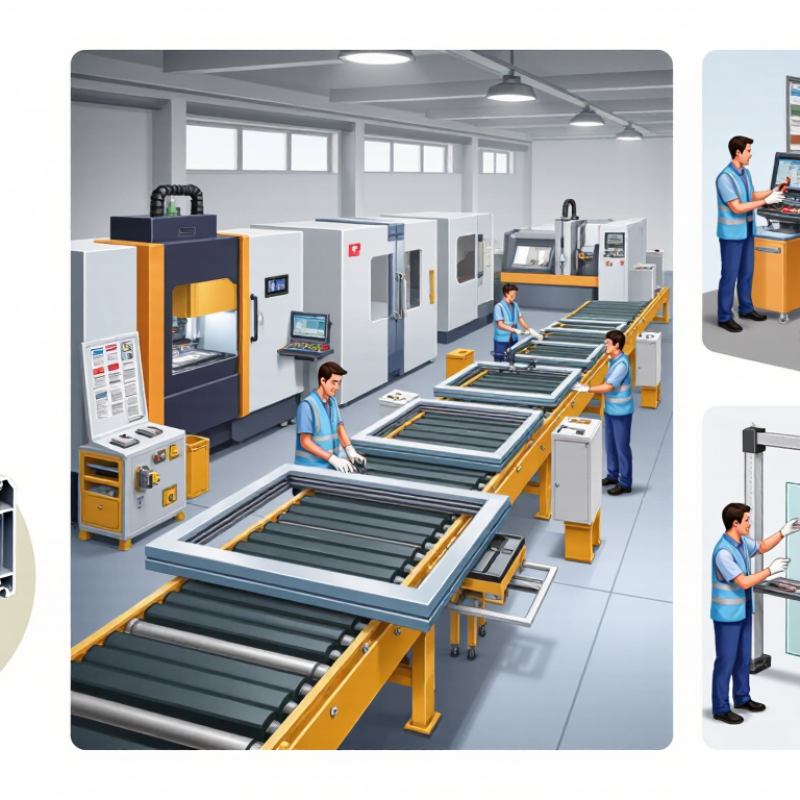
A supplier’s equipment reveals more than a polished showroom. During a factory visit, inspect the aluminum extrusion press, die-maintenance area, CNC cutting line, and thermal-break assembly stations. Look for calibration records, preventive-maintenance logs, and clearly labeled material batches. A clean machine is useful evidence, but not proof of stable production.
The U.S. Department of Energy reports that windows can account for about 25–30% of residential heating and cooling energy use. Therefore, ask how the supplier controls frame geometry, glazing seals, and thermal-break placement. Check whether operators measure corner accuracy, profile thickness, coating adhesion, and air leakage during production. A reliable supplier should show recent test records, not only certificates. Ask to see full-size samples after cutting, crimping, drainage drilling, and hardware installation. Small errors matter.
The International Aluminium Institute states that recycled aluminum requires about 95% less energy than primary aluminum. This makes material traceability and recycling controls worth examining. Request alloy certificates, batch tracking, and records showing recycled-content management. Also observe powder-coating pretreatment, oven temperature logs, and final inspection lighting. I would not trust one perfect sample. Ask for samples from different production days. That exposes variation.
Production software can improve consistency, but it cannot replace skilled inspection. A supplier may own advanced machinery yet use weak process controls. I have seen impressive equipment produce uneven joints when measurement routines were unclear. That is the uncomfortable question: can the supplier repeat quality under pressure, not merely demonstrate it once?
Use this seven-point checklist when examining a supplier’s manufacturing equipment and production processes. Verify equipment capability, calibration records, process controls, testing facilities, and traceable quality documentation before approving a supplier. The chart represents recommended verification areas, not the performance results of any specific company.
7 Tips to Verify Aluminum Window Supplier Technology
Material quality should be checked before appearance. Ask for the alloy grade, temper, wall thickness, and batch certificate. Compare the certificate with markings on the extrusion, not just a sales sheet. A polished sample can still hide thin sections or inconsistent corners.
Request test reports for air leakage, water penetration, wind resistance, thermal performance, and hardware cycles. The reports should identify the tested window size and configuration. Standards must match your project’s location and building requirements. Confirm that the laboratory is independent and accredited under ISO/IEC 17025. Certification documents also need a valid scope, issue date, and traceable certificate number. Expired paperwork is a warning sign.
During a factory visit, measure several profiles with calipers. Check coating thickness, corner joints, drainage paths, and gasket compression. Review incoming inspection records and production traceability. I once found a supplier with excellent samples but weak batch control. That changed my review process. Ask for recent production evidence, not only old certificates. Photographs help, but physical samples reveal more. If the supplier avoids technical questions, pause the evaluation. Verification is rarely perfect. Keep written records, and require corrective actions when results differ from specifications.
| No. | Verification Dimension | What to Verify | Recommended Evidence | Relevant Standard or Reference | Acceptance Indicators | Risk Level |
|---|---|---|---|---|---|---|
| 1 | Aluminum Alloy and Temper | Confirm the alloy and temper used for profiles, such as 6063-T5 or 6063-T6, and check whether the material matches the approved drawings and required mechanical performance. | Material certificate with heat or batch number, chemical composition, mechanical properties, supplier traceability records, and random third-party composition testing when required. | ASTM B221 for aluminum extruded profiles; EN 573 for chemical composition; EN 755-2 for mechanical properties and dimensional requirements. | Alloy, temper, dimensions, tensile strength, yield strength, and elongation are consistent with the purchase specification and certificate. | High |
| 2 | Profile Design and Dimensional Accuracy | Review profile wall thickness, geometry, thermal-break design, drainage paths, corner joints, reinforcement provisions, and dimensional tolerances. | Approved technical drawings, extrusion die drawings, inspection reports, calibrated measurement records, sample cross-sections, and production first-article inspection results. | EN 12020-2 for precision aluminum extruded profiles; EN 755-9 for profile dimensions and form tolerances; project-specific structural calculations where applicable. | Critical dimensions remain within specified tolerances; drainage and thermal-break details are continuous and match the approved design. | High |
| 3 | Surface Treatment and Corrosion Protection | Verify whether the finish is anodized, powder coated, or otherwise specified, including coating thickness, color consistency, adhesion, pretreatment, and resistance to corrosion or weathering. | Coating or anodizing process records, thickness measurements from multiple locations, color comparison records, adhesion test results, pretreatment controls, and salt-spray or other specified test reports. | ISO 7599 for anodizing; ISO 2360 for non-conductive coating thickness measurement; AAMA 2603, 2604, or 2605 where these coating performance levels are specified. | Uniform appearance, no visible blistering or peeling, documented coating thickness, strong adhesion, and performance level suitable for the intended environment. | High |
| 4 | Thermal, Air, Water, and Structural Performance | Confirm the complete window system performance, not only the aluminum profile. Review thermal transmittance, air permeability, watertightness, wind resistance, operating force, and deflection limits. | Test reports for the exact or technically equivalent system, laboratory scope and accreditation details, sample configuration, glass specification, hardware, seals, and test pressure values. | EN 14351-1 for windows and external pedestrian doorsets; EN 1026 and EN 12207 for air permeability; EN 1027 and EN 12208 for watertightness; EN 12211 and EN 12210 for wind resistance. | Results meet the project performance schedule, test dimensions are representative, and the report identifies the tested frame, glass, seals, and hardware configuration. | Critical |
| 5 | Glass, Gaskets, Hardware, and Compatibility | Check that glass thickness, safety classification, spacer, gaskets, rollers, locks, fasteners, sealants, and thermal-break components are compatible with the frame system and intended use. | Component datasheets, glass compliance documents, gasket material specifications, hardware load ratings, compatibility statements, sample inspection records, and approved bill of materials. | EN 1279 for insulating glass units; EN 12150 for thermally toughened glass; EN 14449 for laminated glass; applicable hardware and sealant product standards. | Components match the approved bill of materials, seals remain continuous, drainage is unobstructed, and hardware operates smoothly without excessive force. | High |
| 6 | Product Certification and Factory Quality System | Verify the validity, scope, issuing body, product model, and expiration date of certifications. Confirm that the factory has documented controls for incoming materials, production, inspection, and corrective action. | Current certificates, certificate verification links or reference numbers, audit reports, quality manual, inspection and test plans, nonconformance records, and calibration certificates. | ISO 9001 for quality management systems; EN 14351-1 and applicable national conformity requirements; EN 10204 Type 3.1 for inspection certificates when contractually required. | Certificate scope covers the supplied product and manufacturing site; documents are current, independently verifiable, and consistent with the technical file. | High |
| 7 | Production Traceability and Independent Inspection | Confirm that each batch can be traced from aluminum billet and surface treatment through fabrication, assembly, final inspection, packing, and delivery. | Batch labels, inspection checklists, production records, packing lists, photographic records, factory audit findings, pre-shipment inspection reports, and retained samples. | ISO 9001 documented-process principles; contract inspection plan; applicable project specifications and conformity-assessment requirements. | Records are complete and match purchase-order requirements; independent inspection confirms dimensions, finish, operation, accessories, packaging, and labeling before shipment. | High |
Choosing an aluminum window supplier requires more than checking a polished catalog. Ask how profiles, hardware, seals, and finished units are tested. Request actual test records, not general claims. Look for air leakage, water penetration, wind pressure, thermal performance, and repeated operation tests. Confirm sample sizes, test dates, laboratory competence, and acceptance criteria. A factory tour can reveal useful details: calibrated instruments, labeled specimens, and technicians who explain failures without changing the subject. Small details matter.
Engineering support should begin before quotation. Send drawings, opening sizes, glass specifications, drainage needs, and installation conditions. A capable team should review tolerances, corner joints, thermal breaks, and load calculations. Ask who signs the design and how revisions are controlled. Can engineers provide shop drawings, section details, test plans, and installation guidance? Try a technical meeting with real project questions. Vague answers may signal limited experience. Yet one weak presentation does not always prove poor engineering. People can communicate badly. Check the evidence.
Customization needs practical proof. Ask for a prototype, finish sample, mock-up, or small trial order. Examine color consistency, gasket fit, corner alignment, screw placement, and drainage paths. Confirm whether custom tooling affects cost, lead time, maintenance, or future replacement. Reliable suppliers explain limitations early. They also record corrective actions when a sample fails. Ask for traceable material certificates and inspection reports. Do not accept every document blindly. Cross-check measurements against the physical sample. Then observe how quickly the supplier responds when your requirements change.
When verifying aluminum window supplier technology, do not trust drawings alone. Visit completed projects and inspect the installation results closely. Check frame alignment, corner joints, sealant lines, drainage paths, and opening resistance. A well-fitted window should open smoothly without scraping or excessive force. Look for water stains around sills after rain. Ask the installer how difficult corrections were. A clean site helps, but it proves little.
Request quality records for each production stage. These may include alloy certificates, coating thickness reports, glass specifications, and air, water, and wind test results. Compare report dates with the actual production schedule. Check whether measurements include equipment numbers and inspector signatures. Missing details deserve questions. Technical staff should explain tolerances in plain language, not hide behind technical terms. Records can also contain mistakes. Review them carefully.
After-sales service deserves the same attention as factory technology. Ask for written response times, spare-parts procedures, warranty limits, and escalation contacts. Speak with previous customers about leakage, hardware failures, and repair delays. Test the supplier’s communication before placing an order. Some teams promise fast support but provide vague answers later. That risk is easy to underestimate. Keep a written record of every technical promise, because memory is not a reliable quality system.
Check the extrusion press, die-maintenance area, CNC cutting line, and thermal-break stations. A clean machine helps. But it proves little alone. Review calibration records, maintenance logs, and labeled material batches.
Ask for samples from different production days. Inspect cutting, crimping, drainage drilling, and hardware installation. Measure corner accuracy, profile thickness, coating adhesion, and air leakage. One perfect sample is not enough.
Request alloy grade, temper, wall thickness, and batch certificates. Compare certificate details with markings on the actual extrusion. Also review recycled-content records and material traceability. Documents can look convincing. Physical checks remain necessary.
Ask for air leakage, water penetration, wind resistance, thermal performance, and hardware-cycle tests. Each report should identify the window size and configuration. Check test dates, acceptance criteria, and laboratory competence. Expired paperwork deserves caution.
Confirm independent laboratory accreditation under ISO/IEC 17025. Review the certificate scope, issue date, and traceable certificate number. Make sure standards match the project location and building requirements. A certificate may still have limited relevance.
Provide drawings, opening sizes, glass specifications, drainage needs, and installation conditions. Ask engineers to check tolerances, corner joints, thermal breaks, and load calculations. Request shop drawings, section details, test plans, and installation guidance. Unclear answers are concerning. Still, poor communication does not always mean poor engineering.
Request a prototype, finish sample, mock-up, or small trial order. Inspect color consistency, gasket fit, corner alignment, screw placement, and drainage paths. Ask whether custom tooling changes cost, lead time, maintenance, or replacement options. Small trials expose practical problems.
Change one project requirement and observe the supplier’s response. Ask for written corrective actions when samples fail. Check whether revised drawings and measurements remain traceable. I would not trust speed alone. Clear evidence matters more.
How to verify the production technology of aluminum window suppliers begins with clear evaluation criteria, including dimensional accuracy, structural performance, thermal insulation, weather resistance, and production consistency. Review the supplier’s manufacturing equipment, automated processes, quality-control procedures, and capacity to determine whether its facilities can support stable and efficient production. Material quality should also be confirmed through traceable alloy specifications, technical standards, inspection reports, and valid product certifications.
A reliable evaluation should further examine testing methods for air permeability, water resistance, wind pressure, durability, and safety. Assess the supplier’s engineering support, ability to develop customized designs, and responsiveness to technical changes. Finally, review completed installation results, quality records, maintenance guidance, warranty terms, and after-sales service. By combining factory assessment, document verification, performance testing, and project feedback, buyers can make a more objective judgment about a supplier’s technical strength and long-term reliability.

Magella Door