Aluminum windows offer strength, slim sightlines, and long service life, but they can deform when design, fabrication, and installation work against each other. In 2026, the question is not simply whether aluminum expands. The real question is how the complete window system manages movement, heat, wind, moisture, and structural loads.
Dr. Helen Sanders, a respected fenestration and building-envelope specialist, says, “A window is a system, not a single product.” That principle guides this introduction to How to avoid deformation issues in aluminum windows. The frame, glass, thermal break, fasteners, seals, drainage paths, and surrounding wall must work together. A dark frame exposed to strong afternoon sun can become noticeably hotter than its shaded edge. If expansion gaps are too small, the frame may bow, bind, or place pressure on the glass. Small mistakes become visible problems.
Reliable prevention starts with accurate thermal calculations and realistic site conditions. Engineers should review frame length, alloy selection, wall orientation, glass weight, wind pressure, and fixing points. Installers also need level substrates and controlled screw tension. Over-tightening can restrict natural movement. Poor shimming can create local stress.
Details matter.
Yet no checklist is perfect. I have seen projects follow product drawings and still suffer because the opening was not measured carefully. That uncomfortable lesson deserves attention. Manufacturers, designers, and installers should verify tolerances together, inspect samples, and test drainage before large-scale production. This approach reduces risk and supports better decisions for modern aluminum window projects.
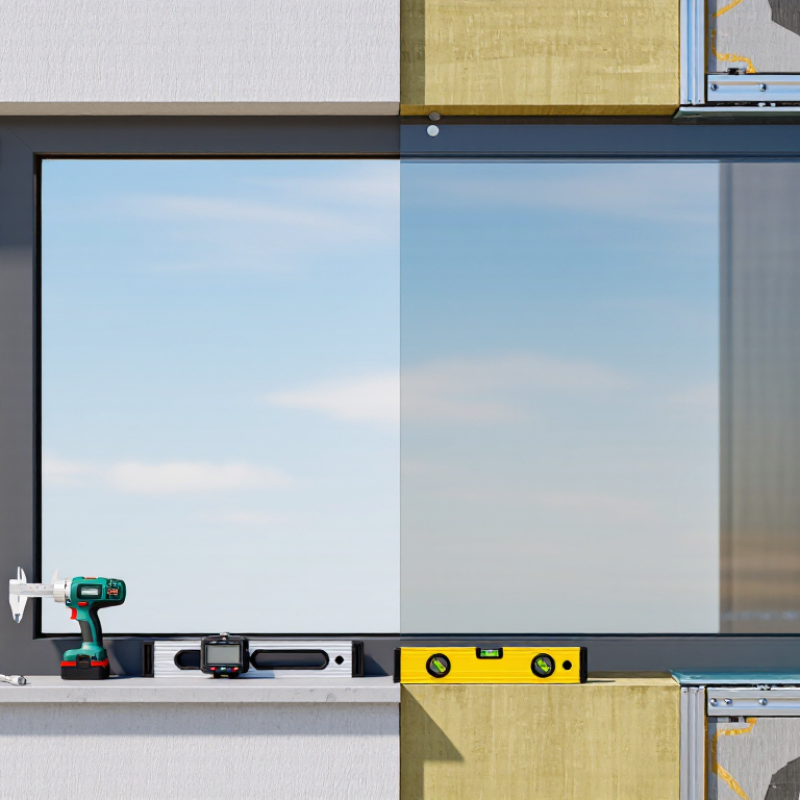
How to Avoid Deformation Issues in Aluminum Windows 2026?
The main cause of aluminum window deformation is uncontrolled thermal movement. The Aluminum Association’s Aluminum Design Manual reports aluminum’s expansion coefficient at about 23.2 μm/m°C. A three-meter frame facing a 50°C temperature change may move nearly 3.5 millimeters. Dark finishes can absorb intense solar heat, while shaded sections remain cooler. This creates uneven stress across the frame. Glass weight adds another concern, especially when setting blocks are misplaced or missing.
Field inspections often find poor installation rather than defective aluminum. An opening that is out of square forces the frame into a permanent twist. Excessive fixing pressure can create local distortion near screws. Inadequate drainage also traps water inside chambers, increasing corrosion risks and freeze-related movement. FGIA AAMA 501.4 testing evaluates window resistance to thermal and structural movement, but laboratory performance cannot correct careless site installation. A perfect frame is not always realistic. Small errors become visible after seasonal cycling.
Tips: Confirm the opening diagonals before installation. Leave movement gaps according to the system engineer’s drawings. Use compatible setting blocks under the glass, not improvised spacers. Check frame plumb, level, and square before final tightening. Record surface temperatures during inspection. This simple detail is often overlooked. Reviewing the Aluminum Design Manual and applicable FGIA installation guidance can expose design assumptions that need reconsideration.
| No. | Deformation Cause | How It Develops | Typical Risk Indicator | Recommended Prevention | Inspection or Design Check | Risk Level |
|---|---|---|---|---|---|---|
| 1 | Thermal Expansion | Aluminum expands and contracts with temperature changes. Its linear thermal expansion coefficient is approximately 23.1 µm/m·°C. | Sticking sashes, uneven gaps, frame bowing, or cracked sealant after strong temperature changes. | Allow movement at frame joints, use correctly sized expansion gaps, avoid rigidly locking long frame runs, and select thermally broken profiles where appropriate. | Calculate movement using ΔL = α × L × ΔT and verify joint details against the project temperature range. | High |
| 2 | Insufficient Wind Resistance | Wind pressure causes the frame, mullions, or transoms to deflect when the profile, reinforcement, span, or anchorage is inadequate. | Permanent bowing, difficult operation, failed gaskets, air leakage, or water penetration during storms. | Use structural calculations, appropriate profile depth, closer anchor spacing, reinforced members, and suitable glass thickness. | Check the calculated deflection and stress against the applicable building code and project specification; do not rely only on visual inspection. | High |
| 3 | Improper Installation | Frames are forced into out-of-square openings, over-tightened, inadequately packed, or fixed without allowing movement. | Diagonal measurements differ, frame edges are twisted, fasteners distort the profile, or the sash rubs immediately after installation. | Plumb and square the opening, use non-compressible setting blocks, maintain designed tolerances, and tighten fasteners evenly. | Measure plumb, level, squareness, diagonal difference, and frame deflection before applying final sealant. | High |
| 4 | Excessive Glass Weight | Large or heavy insulated, laminated, or triple-glazed units overload hinges, rollers, sash corners, or unsupported frame members. | Sash sagging, corner separation, roller damage, uneven compression, or a handle that becomes difficult to operate. | Confirm glass weight, hardware load capacity, setting-block position, sash size, and reinforcement before fabrication. | Verify glass mass from the actual make-up; glass density is approximately 2,500 kg/m³ for soda-lime glass. | High |
| 5 | Incorrect Setting Blocks | Missing, misplaced, soft, or incompatible blocks transfer glass loads unevenly and can deform the sash or damage the glass edge. | Glass movement, localized frame distortion, seal failure, or stress-related glass cracks. | Use durable, compatible blocks of suitable hardness and place them according to the system and glass supplier’s instructions. | Inspect block location, bearing length, material compatibility, and continuous support at specified load points. | Medium–High |
| 6 | Inadequate Anchorage | Too few anchors, excessive spacing, weak substrates, or unsuitable fasteners allow the frame to move under wind and operational loads. | Frame movement, loose fasteners, enlarged holes, sealant separation, or recurring loss of squareness. | Use corrosion-resistant fasteners, approved anchors, suitable edge distances, and a fixing layout designed for the substrate. | Confirm anchor type, embedment, spacing, substrate strength, and installation torque where specified. | High |
| 7 | Poor Storage and Handling | Long profiles or assembled windows bend when stored horizontally without adequate support, stacked unevenly, or lifted from unsuitable points. | Pre-existing twist, dents, scratches, corner displacement, or a frame that is out of square before installation. | Store vertically or on level supports, protect corners, prevent point loading, and use sufficient people or lifting equipment. | Inspect every frame on delivery and record squareness, diagonal measurements, and visible damage before acceptance. | Medium |
| 8 | Moisture and Drainage Problems | Blocked weep holes, incorrect sill slope, or trapped water may cause corrosion at dissimilar-metal contacts and deterioration of adjacent materials. | Persistent water, staining, corrosion products, sealant failure, or movement at sill and corner joints. | Keep drainage paths open, provide correct sill flashing, isolate dissimilar metals, and use compatible sealants and gaskets. | Perform water testing where required and verify that weep holes discharge freely to the exterior. | Medium |
| 9 | Uneven Building Movement | Settlement, slab-edge deflection, or structural drift transfers movement to the window when the frame is rigidly connected. | Repeated cracking at perimeter joints, distorted openings, binding sashes, or sealant gaps that reopen. | Coordinate movement joints, use flexible perimeter interfaces, and avoid transferring structural loads to the window frame. | Review structural movement allowances and confirm that the installation detail matches the building movement design. | High |
| 10 | Poor Maintenance or Hardware Adjustment | Blocked tracks, worn rollers, loose screws, and incorrect hardware adjustment increase operating forces and gradually distort the sash. | Rubbing, abnormal handle force, uneven gasket compression, noise, or visible wear at rollers and hinges. | Clean drainage and tracks, lubricate compatible hardware, replace worn components, and adjust hardware according to the system instructions. | Carry out periodic operational checks and investigate any sudden increase in opening or closing force. | Medium |
Note: Risk levels are general design and installation guidance. Final profile selection, allowable deflection, anchor spacing, and movement allowances must be verified against the applicable local building codes, project specifications, structural calculations, and window-system instructions.
Uneven thermal movement is a major cause. Aluminum expands and contracts as temperatures change.
A 50°C temperature change may create nearly 3.5 millimeters of movement. Small gaps matter.
Dark surfaces absorb stronger sunlight. Shaded areas stay cooler, creating uneven stress across the frame.
Yes. Heavy glass can strain the frame when setting blocks are missing or misplaced.
An opening that is not square can twist the frame permanently. Check both diagonal measurements before fixing.
Yes. Excessive pressure may bow the jamb inward near the screws. I have seen this happen.
Keep the opening plumb, level, and square. Use compatible shims at load points and leave the required movement gap.
Blocked drainage paths trap water inside frame chambers. This may increase corrosion risks and movement during freezing weather.
Test the sash before and after sealing. Confirm smooth movement, open weep holes, and correct fastener spacing.
Yes, especially after seasonal temperature changes. A perfect assumption may fail, so record shim positions and inspect again.
How to avoid deformation issues in aluminum windows begins with understanding the main sources of distortion, including temperature changes, wind pressure, uneven building settlement, improper handling, and excessive frame stress. Window profiles should be selected according to the local climate, opening size, wind loads, and expected use. Strong, properly designed profiles, combined with reliable aluminum material and accurate production tolerances, help maintain dimensional stability and prevent problems such as bending, twisting, or poor sealing.
Correct installation is equally important. Frames should be positioned accurately, supported at suitable points, fixed without excessive force, and connected with compatible fasteners and sealing materials. Installers should also allow appropriate space for thermal expansion and avoid forcing the frame into an uneven opening. After installation, regular inspections should check alignment, hardware performance, drainage paths, seals, and signs of corrosion or movement. Timely adjustments and maintenance can reduce stress accumulation and preserve window performance for many years.

 Magella Door