2026 How to Choose Aluminum Doors for Commercial Storefronts?

Time:2026-10-23 Author:Amelia
0%

Choosing aluminum doors for commercial storefronts is not simply a matter of selecting an attractive frame. In 2026, entrance systems must balance appearance, daily traffic, energy performance, security, and long-term maintenance. A busy retail entrance may experience thousands of openings each week. That pressure exposes weak hinges, poor closers, and undersized door profiles quickly.

This guide explains How to select aluminum doors suitable for commercial storefronts through practical, evidence-based considerations. It examines storefront layout, aluminum alloy quality, frame strength, glass selection, thermal performance, hardware, and accessibility requirements. Real project experience shows that a polished finish cannot compensate for incorrect measurements or unsuitable door hardware. A beautiful door can still become difficult to operate.

Small details matter.

Before ordering, evaluate the opening width, sill condition, wind exposure, drainage, and expected customer flow. A narrow entrance may create uncomfortable congestion during peak hours. A heavy glass door may need a stronger closer than the product brochure suggests. These details deserve on-site verification, not assumptions.

Reliable selection also requires checking manufacturer testing, installation procedures, warranty terms, and replacement-part availability. Local building, fire, and accessibility requirements should be confirmed with qualified professionals before installation. Standards and project conditions vary. Even experienced buyers can overlook maintenance access or future hardware replacement. That weakness deserves honest attention. The following discussion offers a clear framework for comparing aluminum storefront doors and making a durable, commercially responsible choice.
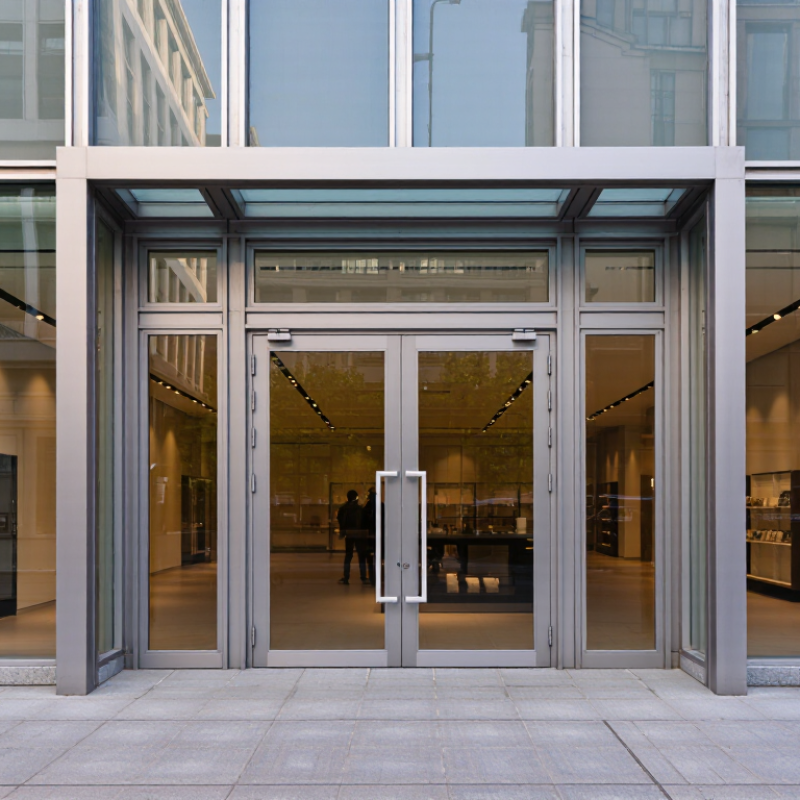
2026 How to Choose Aluminum Doors for Commercial Storefronts?

What Are Aluminum Doors for Commercial Storefronts?

How to Choose Aluminum Doors for Commercial Storefronts?

Aluminum doors for commercial storefronts are framed entry systems made from lightweight metal and glass. They commonly serve shops, offices, clinics, and restaurants. Their slim frames create wide viewing areas and allow daylight into the customer space. Aluminum also resists rust, which helps in humid or rainy locations. However, it can transfer heat quickly without a thermal break.

In practice, door performance depends on more than the frame. Check the glass thickness, frame depth, hinges, locks, closers, and threshold design. High-traffic entrances need durable hardware and smooth operation. Measure the opening carefully before ordering. A small measurement error can create drafts, difficult closing, or expensive adjustments. Some assumptions fail here. A thicker frame does not automatically mean better performance.

Tips:

Watch the door during busy hours. Does it swing freely? Does the closer control movement without slamming? Ask an experienced installer to inspect drainage, weather seals, and floor conditions. Choose insulated glass when indoor comfort matters. For accessible entrances, verify local requirements with a qualified professional. Finish color matters too, but surface preparation and maintenance matter more. Clean dirt from tracks and hinges regularly. Avoid harsh chemicals. Check the warranty terms, service access, and replacement-part availability before purchase.

Which Aluminum Door Types Suit Different Storefront Needs?

Choosing aluminum doors for a commercial storefront starts with the customer’s movement, not only the building’s appearance. Different businesses need different door types, traffic control, and security levels.

Hinged aluminum doors suit boutiques, offices, and smaller shops with moderate daily traffic. They offer a familiar opening action and can support large glass panels for product visibility. However, a poorly planned swing path can block displays or narrow the entrance. Measure carefully. For busy supermarkets, malls, and clinics, automatic sliding doors often improve flow. They help customers carrying bags, though their sensors and tracks need regular inspection.

Framed sliding doors work well where space is limited. They need less clearance than hinged units and can separate an entry area from a sales floor. They may not provide the same visual openness as frameless glass systems. Narrow-stile aluminum doors create a clean, modern sightline, while medium or wide-stile doors provide more frame strength and better resistance to frequent use. In exposed climates, thermally improved frames can reduce interior temperature changes. That feature is useful, but it cannot correct poor installation.

For emergency exits, accessible entrances, and automatic operators, follow local building and safety requirements. Requirements differ by location. Consult a qualified installer before ordering. From practical site checks, door weight, threshold height, drainage, and hardware quality often matter more than appearance. I have seen attractive entrances fail because rain collected at the sill. A simple water test during installation can reveal problems early.

How Should Storefront Door Materials and Glass Be Evaluated?

Choosing aluminum doors for a commercial storefront starts with the building’s daily demands. A busy café needs stronger hardware than a quiet office. Measure traffic, door width, exposure to rain, and cleaning routines before selecting a frame.

Aluminum is light, corrosion-resistant, and easy to maintain. However, thin profiles may transmit heat and sound. Look for thermally improved frames when indoor comfort matters. Inspect corner joints, drainage paths, hinges, and threshold details. Small gaps can invite water during heavy storms. A durable powder-coated finish helps, but surface appearance alone proves little. I have seen attractive frames fail because installers ignored alignment and flashing.

Glass deserves equal attention. Tempered glass resists impact better, while laminated glass can remain held together after breakage. For sunny façades, compare U-factor, solar heat gain, and visible light transmission. Low-e coatings may reduce glare and cooling loads, but they can change the storefront’s color. Test a sample beside interior lighting. Safety markings and local building requirements must be verified with qualified professionals. Do not rely only on a supplier’s brochure.

Think about the customer’s hand. Is the pull comfortable? Does the closer shut smoothly without slamming? These practical details reveal quality quickly. My own preference has changed: maximum glass is not always the best choice. More transparency can increase heat, glare, and cleaning work. A balanced design often performs better, even when it looks less dramatic.

2026 How to Choose Aluminum Doors for Commercial Storefronts?

Evaluate the aluminum frame, glazing configuration, thermal performance, solar control, durability, and visible light transmission together. The chart below shows representative performance values commonly used when comparing commercial storefront glazing options.

How to read the chart: A lower U-factor indicates better insulation, while a lower SHGC reduces solar heat gain. Low-E and multiple-pane glass generally improve energy performance, but the final selection should also consider daylight, climate, orientation, safety glazing requirements, door traffic, condensation resistance, and the thermal performance of the complete aluminum door assembly.

How Can Security, Accessibility, and Energy Efficiency Be Compared?

Choosing aluminum doors for a commercial storefront starts with three daily realities: forced entry, customer movement, and heat loss. Security is not just a thicker frame. Look for tested frame-and-hardware assemblies, laminated or tempered safety glazing, concealed fasteners, and dependable multipoint locks. A busy shop needs hinges that resist sagging after thousands of openings. Ask for test reports, installation details, and maintenance intervals. Claims without documents deserve caution.

Accessibility should be tested with a wheelchair, stroller, and full shopping bag, not only a measuring tape. The entrance needs clear passage, manageable opening force, visible contrast, and a level threshold. Automatic operators can help, but sensors require reliable detection in rain, glare, and crowded queues. A door that opens slowly may feel safe yet frustrate customers. Site observations often reveal problems that drawings miss. Still, user needs differ, so invite staff and customers to review a mock-up.

Energy performance depends on the entire opening. Thermally improved frames, low-emissivity glazing, continuous seals, and correctly adjusted closers can reduce drafts near the checkout. Compare U-values, solar heat gain, and air-leakage data under consistent test conditions. A west-facing entrance may need solar-control glass, while a shaded doorway may prioritize daylight. Do not over-specify blindly. Poor installation can weaken excellent components. Review condensation risks, cleaning access, and replacement costs before approval. A door can meet specifications and still feel awkward.

What Installation, Maintenance, and Cost Factors Should Be Reviewed?

Choosing aluminum doors for a commercial storefront requires more than comparing frame colors and glass styles. Installation conditions often determine long-term performance. Measure the opening at several points, because older buildings rarely remain perfectly square. Confirm wall depth, drainage paths, threshold height, and nearby electrical or security equipment before ordering. A level frame matters. Small gaps matter too.

Use an experienced installer who understands commercial entry systems and local building requirements. The door should open smoothly without rubbing, while hinges, closers, locks, and weather seals need careful adjustment. I have seen minor alignment errors create drafts, water marks, and uneven wear within months. That risk is easy to underestimate. Ask for written installation details, product specifications, and a clear labor warranty.

Tips: Request a site survey before receiving a final quote. Compare the full cost, including removal, delivery, glazing, hardware, permits, and future service. Choose finishes that tolerate frequent cleaning and heavy customer traffic. Inspect seals and fasteners during routine maintenance, especially after storms or temperature changes. Keep spare keys and adjustment records organized. Maintenance may seem minor, but neglected closers can damage the frame and create safety concerns. Energy performance also deserves review; insulated glass and effective seals may cost more initially, yet they can reduce interior discomfort and operating expenses. Be realistic about the budget. The cheapest door is not always the least expensive choice.

2026 How to Choose Aluminum Doors for Commercial Storefronts? - What Installation, Maintenance, and Cost Factors Should Be Reviewed?

Review Category Factor to Evaluate Typical Commercial Requirement or Range Why It Matters Recommended Review Point
Project Planning Door configuration Single, paired, sliding, folding, or automatic entrance doors The configuration affects traffic flow, usable opening width, hardware, and installation complexity. Select the layout according to peak occupancy, delivery movement, and available storefront width.
Project Planning Opening dimensions Common commercial door leaves are approximately 900–1,200 mm wide and 2,100–2,400 mm high; verify local requirements. Incorrect measurements can cause fitting problems, air leakage, delays, and expensive remedial work. Measure the structural opening at several points and confirm level, plumb, sill condition, and finished-floor height.
Performance Aluminum frame depth Commercial storefront systems commonly use frame depths of about 100–150 mm, depending on the system. Deeper or thermally improved frames can provide greater strength, glazing capacity, and weather performance. Match the frame system to wind exposure, glazing weight, local climate, and expected traffic.
Performance Glazing selection Typical options include tempered, laminated, insulated, low-emissivity, and security glazing. Glass choice influences safety, heat gain, energy use, acoustics, visibility, and replacement cost. Use safety glazing where required and confirm thermal or solar-control performance for the site.
Performance Thermal efficiency Thermally broken frames generally provide better insulation than standard non-thermal storefront frames. Improved thermal performance can reduce drafts, condensation risk, and heating or cooling demand. Compare whole-door U-value or system performance rather than evaluating the aluminum frame alone.
Performance Weather resistance Air, water, and structural performance should be verified through tested system data where exposure is significant. Poor drainage or sealing can lead to water intrusion, floor damage, and premature frame deterioration. Review sill drainage, weep paths, perimeter sealants, flashing, and wind-load requirements.
Accessibility Clear opening and operating force Provide a usable clear opening and operating force that comply with the applicable accessibility code. Accessibility affects customer access, legal compliance, safety, and the suitability of door closers. Check local requirements for clear width, thresholds, maneuvering clearance, opening force, and signage.
Security Locks and hardware Options include mortise locks, deadlatches, panic exit devices, electric strikes, closers, and access-control hardware. Hardware determines security, emergency egress, user convenience, and long-term service needs. Confirm compatibility between the door, frame, lock, access-control system, and fire or exit strategy.
Installation Typical installation duration A straightforward replacement may take about 1 day; new or complex storefront work may require 2–5 working days. The schedule depends on demolition, substrate repairs, glazing, electrical work, weather, and inspection requirements. Allow additional time for custom fabrication, permits, structural repairs, and occupied-site coordination.
Installation Installation scope May include removal, disposal, frame setting, shimming, anchoring, glazing, sealants, hardware adjustment, and testing. A low initial quote may exclude essential work and create unexpected change orders. Request an itemized quotation showing labor, materials, permits, access equipment, protection, cleanup, and disposal.
Installation Substrate and sill condition The opening should be structurally sound, level, plumb, dry, and suitable for anchoring and drainage. Movement or water accumulation at the sill can cause sticking, leakage, and sealant failure. Include a pre-installation survey and specify who is responsible for masonry, concrete, or sill repairs.
Cost Installed cost planning range For budgeting only, a commercial aluminum entrance door may range from approximately USD 2,000–10,000+ installed, depending on size, glazing, hardware, and site work. Custom dimensions, automatic operators, security glazing, access control, and difficult access can increase the total substantially. Use local quotations; the range is an indicative planning benchmark, not a guaranteed market price.
Cost Cost allocation Main cost groups are frame and door, glass, hardware, labor, demolition, access control, permits, and finishing work. Separating cost groups makes competing quotations easier to compare accurately. Compare equivalent specifications, warranties, inclusions, taxes, delivery terms, and installation assumptions.
Maintenance Routine cleaning Clean aluminum frames and glass with mild detergent and water; avoid abrasive cleaners and harsh chemicals. Regular cleaning limits staining, protects finishes, and helps reveal drainage or seal problems. Clean more frequently in coastal, industrial, dusty, or high-traffic environments.
Maintenance Hardware inspection Inspect hinges, pivots, closers, locks, handles, thresholds, and fasteners at least every 6–12 months. Loose or worn hardware can cause misalignment, unsafe closing, security issues, and premature replacement. Use a documented inspection checklist and service high-use entrances more often.
Maintenance Sealants, gaskets, and drainage Check perimeter sealants, glazing gaskets, weatherstripping, weep holes, and sill drainage channels. Blocked drainage and failed seals are common causes of water infiltration and air leakage. Repair failed sealants promptly and never block designed drainage openings.
Lifecycle Warranty and spare parts Confirm separate coverage periods for frames, glass, finish, hardware, automatic operators, and installation workmanship. Parts availability and clear warranty exclusions directly affect future downtime and repair cost. Obtain written warranty terms, maintenance instructions, replacement-part information, and service response conditions.
Compliance Permits, codes, and testing Requirements may include building permits, safety glazing, accessibility, wind load, energy, fire egress, and electrical approvals. Non-compliance can cause failed inspections, reopening costs, liability exposure, and delayed occupancy. Verify requirements with the local authority or qualified project professional before ordering.

Note: Cost ranges, dimensions, schedules, and maintenance intervals are indicative planning values. Final specifications should be confirmed against local building codes, site conditions, tested system data, and project quotations.

FAQS

What are aluminum storefront doors used for?

They serve shops, offices, clinics, and restaurants. Their slim frames provide broad views and admit daylight.

Why is aluminum suitable for commercial entrances?

Aluminum is lightweight, resists rust, and requires relatively simple maintenance. It suits humid or rainy locations.

What limitation should buyers consider?

Aluminum transfers heat quickly without a thermal break. Thermally improved frames may improve indoor comfort.

Which door components should be evaluated?

Check the glass, frame depth, hinges, locks, closer, threshold, seals, and drainage paths. Every part matters.

How should the storefront opening be measured?

Measure width, height, and floor conditions carefully before ordering. Small errors can cause drafts or difficult closing.

What glass options may suit a commercial storefront?

Tempered glass resists impact better. Laminated glass can stay together after breakage. The choice depends on project needs.

How can sunlight affect glass selection?

Compare U-factor, solar heat gain, and visible light transmission. Low-e coatings may reduce glare and cooling demand.

How can door quality be checked during daily use?

Watch the entrance during busy hours. The door should swing freely and close smoothly without slamming.

What maintenance helps aluminum storefront doors last longer?

Clean dirt from tracks and hinges regularly. Avoid harsh chemicals. Inspect seals, alignment, and drainage after severe weather.

What should be confirmed before purchase?

Review warranty terms, service access, replacement-part availability, and local accessibility requirements. A polished appearance proves little.

Conclusion

Choosing the right entrance system is essential for a safe, attractive, and efficient commercial storefront. This guide explains how to select aluminum doors suitable for commercial storefronts by comparing common options such as hinged, sliding, automatic, and folding doors. Each type offers different benefits for traffic flow, available space, customer convenience, and design goals. It also examines how aluminum frame strength, finish quality, glass type, visibility, insulation, and weather resistance affect long-term performance.

The guide further reviews key factors including security hardware, accessibility requirements, energy efficiency, installation conditions, maintenance needs, and total cost of ownership. Business owners can use these criteria to balance appearance, durability, safety, and budget rather than choosing solely by initial price. By considering daily usage, climate, building layout, and future servicing requirements, they can select a storefront door solution that supports smooth operations, welcomes customers, and maintains reliable performance over time.

Amelia

Amelia

Amelia is a seasoned marketing professional with a wealth of expertise in our company’s core offerings. With an unwavering passion for driving growth and innovation, she plays a pivotal role in shaping our marketing strategies and enhancing brand visibility. A key aspect of her responsibilities......