Top 5 Hardware Quality Checks for Aluminum Doors?

Time:2026-05-11 Author:Sienna
0%

When considering aluminum doors, it is essential to examine the hardware quality closely. Expert architect Sarah Linden emphasizes, "The strength of an aluminum door lies in its hardware quality." This insight leads us to a crucial question: "What hardware quality should I check for aluminum doors?" Ensuring the right components can significantly impact performance and durability.

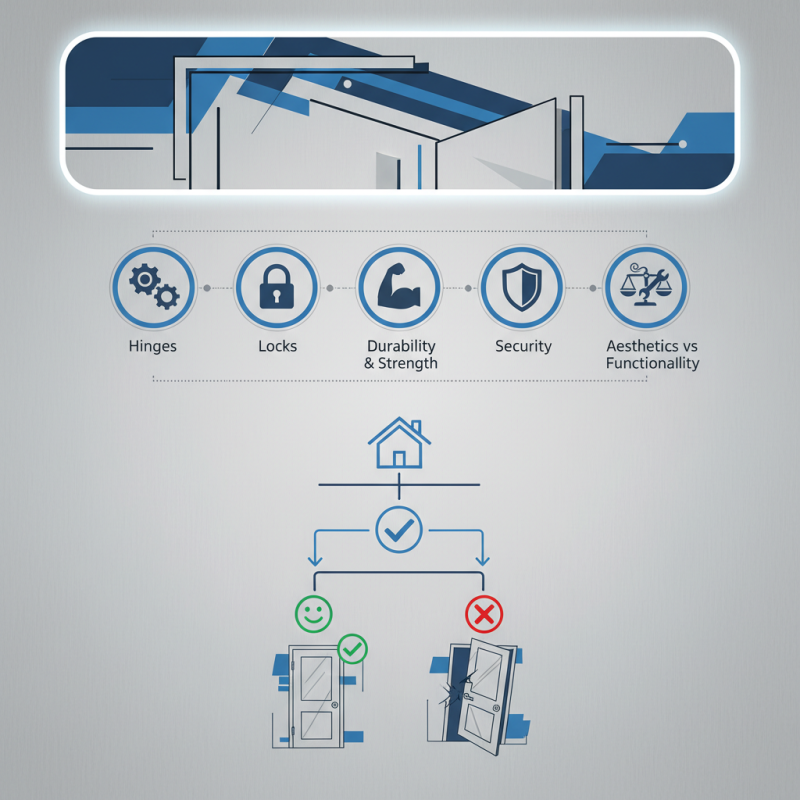
Hardware quality encompasses various aspects, from hinges to locks. Poor-quality hinges can lead to misalignment over time. This misalignment may result in difficulty when opening or closing the door. Similarly, subpar locks can compromise security and may require frequent replacements. Using trusted brands can mitigate such issues.

It's also important to reflect on your choices regarding aesthetic appeal versus functionality. While decorative hardware may look attractive, it should never sacrifice performance. Balancing both aspects is vital. Understanding these factors helps homeowners make informed decisions, ultimately leading to long-term satisfaction and security.
Top 5 Hardware Quality Checks for Aluminum Doors?

Key Specifications to Assess in Aluminum Door Hardware Quality

When evaluating aluminum door hardware quality, it’s essential to focus on key specifications. Look for corrosion resistance, as aluminum can be susceptible to environmental factors. A quality finish can prevent oxidation over time, ensuring durability and aesthetics. Pay attention to the coatings used. They should be tested for longevity and should withstand various weather conditions.

Strength is another crucial factor. Hardware must endure frequent use without wear. Testing the tensile strength of the materials reveals how reliable they are. Inspect hinges and locking mechanisms closely. They must operate smoothly and securely. Any stickiness or resistance can lead to breakdowns in performance.

Finally, consider the installation features. Are the components designed for easy assembly? Complexity can lead to installation errors or hardware failure. It's worth examining user reviews or expert opinions on installation ease. Feedback can reveal potential issues not evident during a simple inspection. By concentrating on these specifications, you can make informed choices about aluminum door hardware.

Testing Durability: The Importance of Load and Stress Analysis

When evaluating aluminum doors, load and stress analysis is crucial. This process examines how doors respond under various pressures. The durability of aluminum hinges, frames, and panels hinges on their ability to withstand external forces. Simulating real-life scenarios helps determine how much weight a door can handle before showing signs of weakness.

Many manufacturers overlook the importance of testing for fatigue. A door may appear visually strong, yet fail during use. It's essential to implement rigorous testing procedures that mimic everyday interactions. Simple actions like repeated openings and closings can reveal potential issues long before they occur in real life.

Moreover, a focus on load-bearing capacity often leads to missed opportunities for improving designs. Engineers should rethink traditional methods and explore innovative solutions. By integrating comprehensive stress analysis, manufacturers can produce doors that last longer and perform better in practical applications. Testing does not just confirm strength; it opens doors to better quality control.

Corrosion Resistance: Evaluating Protective Coatings on Aluminum Doors

Corrosion resistance is crucial for aluminum doors. Protective coatings play a vital role in enhancing durability. These coatings safeguard the aluminum from environmental factors such as moisture and salt exposure. When evaluating these coatings, consider their thickness and uniformity. A consistent coating is essential for optimal performance.

Conduct regular inspections to assess the condition of the protective layers. Look for any signs of chipping or peeling. If any issues arise, it may indicate that the coating is compromised. Retrofitting doors with a new protective layer can enhance their lifespan significantly.

Tips: Always choose coatings designed for your specific environment. For coastal areas, seek coatings with enhanced salt resistance. Utilize high-quality application methods to ensure uniform coverage. Regular maintenance checks can extend the life of the door and its coating. Remember, a small investment in quality now can save you costs in the long run.

Fit and Finish: Checking for Precision in Hardware Alignment

When inspecting aluminum doors, the precision of hardware alignment is crucial. Fit and finish play significant roles in both functionality and aesthetic appeal. Research indicates that misalignment can lead to significant energy loss. A study by the American Institute of Architects suggests that poorly aligned doors can cause up to 20% inefficiency in energy usage. This inefficiency translates into higher utility costs and reduced comfort levels in buildings.

Moreover, even slight deviations in hardware placement can result in complications over time. For instance, hinges that are not aligned can stress the door material, causing premature wear. A report from the Building Research Establishment highlights that 40% of door failure can be attributed to improper installation. Regular checks for hardware alignment should be a standard practice, not an afterthought. Ensuring that each component fits perfectly may require multiple adjustments and careful attention to detail.

Visual inspections can often reveal misalignments through gaps and uneven spacing. It's essential to use measuring tools to confirm the exact positions of each hardware piece. Routine maintenance that includes these checks can prolong the lifespan of the door. Ignoring hardware misalignment could lead to greater issues later, escalating repair costs. Adjustments made during the installation not only improve aesthetics but also enhance overall function.

Top 5 Hardware Quality Checks for Aluminum Doors

Quality Check Description Importance Typical Issues
Hardware Alignment Ensuring that all hardware components are correctly aligned and fitted. Prevents operational issues and ensures smooth functionality. Misalignment, causing doors to stick or not function properly.
Fastener Integrity Checking that all screws, bolts, and hinges are secure and intact. Maintains the structural integrity of the door and hardware. Loose or missing fasteners leading to hardware failure.
Surface Finishing Evaluating the overall surface finish for scratches, dents, or imperfections. Aesthetic appeal and resistance to environmental factors. Visible defects that could compromise the door's appearance.
Functionality Testing Testing the door's operation, including opening and closing smoothly. Ensures that doors operate as intended without hindrance. Doors that jam or do not fully latch.
Weather Stripping Assessment Checking the condition of weather stripping for gaps and seals. Critical for energy efficiency and protection against the elements. Worn or missing stripping that allows drafts or water ingress.

Functionality Tests: Ensuring Smooth Operation of Door Mechanisms

Functionality tests are crucial for aluminum doors. These tests ensure that the door mechanisms operate smoothly under various conditions. A study by the American Architectural Manufacturers Association revealed that 30% of door failures result from improper installation or mechanical issues. This highlights the importance of thorough testing.

During functionality tests, we assess the ease of operation, alignment, and responsiveness of aluminum doors. The doors should open and close with minimal effort. A well-tuned mechanism not only enhances user experience but also extends the lifespan of the product. Misalignment can cause friction, leading to wear and costly repairs.

Regular checks can prevent these issues. A quarterly inspection can catch potential problems early. Despite advancements in manufacturing, human errors in installation remain a risk. It's essential to balance precision with practicality in testing processes. A mechanical failure can undermine confidence in the entire door system. Understanding these details will lead to better decision-making and improved product reliability.

Top 5 Hardware Quality Checks for Aluminum Doors

FAQS

: Why is load and stress analysis important for aluminum doors?

: It helps evaluate how doors perform under various pressures and loads.

What happens if manufacturers overlook fatigue testing?

A door may seem strong but can fail during daily use.

How can repetitive actions affect aluminum doors?

Regular openings and closings can expose potential weaknesses.

What should manufacturers do to improve door designs?

They should rethink traditional testing methods and explore innovative solutions.

Why is corrosion resistance vital for aluminum doors?

Protective coatings shield aluminum from moisture and salt, enhancing durability.

What should you inspect for when evaluating protective coatings?

Check for thickness, uniformity, chipping, or peeling of the coating.

What is a good practice when applying protective coatings?

Use high-quality methods for uniform coverage to ensure optimal performance.

How can retrofitting doors benefit their lifespan?

Adding a new protective layer can significantly enhance durability.

What tip is suggested for coatings in coastal areas?

Choose coatings with enhanced salt resistance for better protection.

What can regular maintenance checks achieve for aluminum doors?

They can extend the life of the door and its protective coating.

Conclusion

When considering the quality of hardware for aluminum doors, there are several key factors to evaluate. First, assess key specifications like the material grade and weight rating, which are critical for performance and durability. Load and stress analysis tests are essential to determine how well the hardware can withstand pressure over time. Additionally, check for corrosion resistance by evaluating the protective coatings, ensuring that the aluminum doors maintain their integrity against environmental elements.

Fit and finish are also vital, as precision in hardware alignment can significantly affect the door's function. Lastly, conducting functionality tests is important to ensure that the door mechanisms operate smoothly and without hesitation. In summary, when asking, "What hardware quality should I check for aluminum doors?" focus on these parameters to ensure optimal performance and longevity of your doors.

Sienna

Sienna

Sienna is a skilled marketing professional with a deep expertise in our company’s core products and services. With a passion for innovation and detail, she plays a pivotal role in crafting insightful blog posts that not only highlight the unique features of our offerings but also provide valuable......