High-quality aluminum doors do more than create a clean entrance. They protect people, property, and everyday comfort. A poorly specified door may close harshly, allow water inside, or weaken after repeated use. Small failures matter. A child’s fingers near a closing edge can face real danger. Loose hinges can also turn a solid door into a security concern.
What safety features should high-quality aluminum doors have? They should include strong multi-point locks, reinforced hinges, laminated or tempered safety glass, and dependable anti-finger-trap protection. Smooth door closers can prevent sudden slamming. Low thresholds reduce tripping risks, while effective drainage channels help control rainwater. In windy locations, limiting stays or controlled opening systems can prevent the door from striking nearby walls. These details should match the building’s use, climate, and traffic level.
Certified materials and documented testing provide useful evidence, but they do not replace careful installation. Experienced installers should check frame alignment, fixing points, seal compression, and lock operation. A door can have excellent components and still perform poorly when fitted carelessly. That is easy to overlook. Regular inspection also matters, especially around hinges, handles, seals, and glass edges.
No door is completely risk-free. However, thoughtful design can reduce predictable hazards and improve long-term reliability. Buyers should ask manufacturers for test information, maintenance guidance, and clear warranty terms. I would also question vague promises about “maximum safety.” Specific features, verified performance, and honest installation advice are more dependable than attractive marketing language.
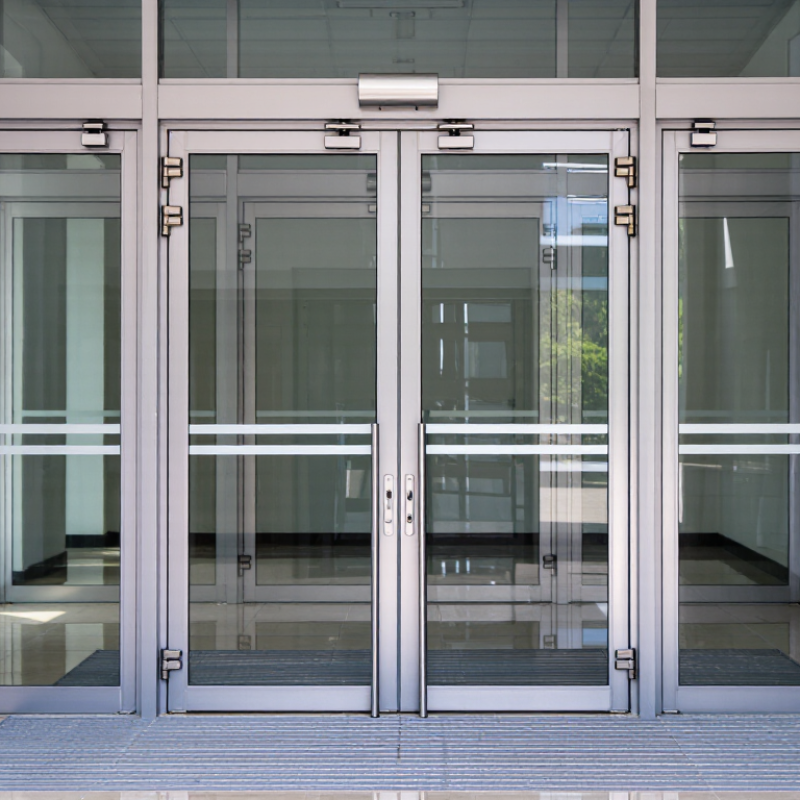
Safety standards turn an aluminum door from a simple entrance into a controlled protective system. The World Health Organization reports that falls cause about 684,000 deaths each year worldwide. Door thresholds, slippery surfaces, and sudden closing can increase everyday risk. High-quality designs should use stable frames, rounded edges, secure hinges, and low-resistance opening hardware. Safety glazing also matters. EN 12600 classifies glass after pendulum-impact testing, while laminated glass can remain partly attached after breakage. These details reduce sharp fragments near children, offices, and busy entrances.
Performance testing must match the installation environment. The North American Fenestration Standard, AAMA/WDMA/CSA 101/I.S.2/A440, evaluates air leakage, water penetration, and structural performance. In coastal areas, wind-load calculations deserve special attention. A door may look solid but still flex under pressure. European projects may also reference EN 14351-1 for external doors and windows. Requirements differ by region, so qualified installers should confirm local standards and test evidence. One weakness remains: certificates cannot correct poor installation. A small frame gap can admit water, create drafts, or weaken locking alignment.
Tips: Check the glass classification, threshold height, hinge protection, lock cycle data, and emergency-release function. Ask for test reports, not only marketing claims. Inspect seals after installation. Even a premium door needs adjustment. That is often overlooked.
Why Should High Quality Aluminum Doors Have Safety Features?
Structural Features That Improve Door Safety
A high quality aluminum door should resist movement, impact, and daily misuse. Its safety begins with a well-engineered frame, not decorative finishes.
During practical inspections, I check whether the frame remains square after repeated opening cycles. Reinforced corner joints reduce twisting around the hinges. Strong hinges also help prevent the door leaf from sagging over time. Small movement matters.
Multi-point locks distribute pressure along the frame instead of concentrating it near one latch. This improves resistance to forced impact and keeps the door firmly aligned. However, complicated hardware can fail when poorly adjusted. Regular inspection is still necessary.
Glass panels need equal attention. Laminated or tempered safety glass reduces injury risks if breakage occurs. Narrow sightlines and clear panels can also improve visibility near busy entrances. A soft-closing mechanism limits sudden movement, while anti-finger guards protect children and workplace users.
The threshold should support smooth passage without creating a trip hazard. Drainage channels help prevent water from collecting beneath the frame. In coastal or wet areas, corrosion-resistant fasteners are especially important. Even premium aluminum can weaken when installation ignores moisture and expansion.
I once noticed a sturdy door rubbing against its frame after seasonal temperature changes. The material was not the main problem. Incorrect clearance was. Safety depends on design, accurate installation, and maintenance working together.
High quality aluminum doors protect more than a building’s entrance. They help control fire, severe weather, and forced entry risks. Aluminum frames do not provide complete fire protection alone. Fire-rated cores, insulated panels, tested glass, and heat-resistant seals are also important. A reliable door system should have documented testing from an independent laboratory.
Weather protection begins with accurate drainage and strong perimeter seals. These details reduce water penetration during heavy rain. Thermal breaks also limit heat transfer and surface condensation. In coastal or windy areas, reinforced frames and secure anchoring matter greatly. Small installation errors can weaken excellent materials. That point is often overlooked.
Forced-entry resistance depends on the complete assembly. Multi-point locks, reinforced hinges, laminated glass, and impact-resistant hardware improve protection. The frame, wall connection, and lock must work together. One strong component cannot fix a weak installation. No door is invincible. However, thoughtful design can delay entry and protect occupants.
Tips: Check fire-test documentation before purchasing. Inspect seals for gaps, especially near corners. Choose hardware suited to local wind and moisture conditions. Ask a qualified installer to verify frame anchoring. Recheck moving parts every year, because neglected maintenance quietly reduces safety.
High-quality aluminum doors should make everyday movement feel controlled, not complicated. Safety hardware supports that experience through reliable closers, stable hinges, guarded glass, and correctly adjusted locks. During site inspections, I check how the door behaves after repeated opening. A closer that slams can injure fingers, damage frames, and discourage users from using the entrance properly. Small details matter.
The World Health Organization reports about 684,000 fatal falls worldwide each year. Older adults face the greatest risk. This is not a door-specific statistic, but it highlights why thresholds, floor transitions, and opening resistance deserve careful attention. The UK Health and Safety Executive recorded 561,000 self-reported workplace injuries in 2023/24. Slips, trips, and falls remain a significant concern. A low threshold, visible safety glass, and smooth operation can reduce everyday hazards, although they cannot replace proper installation.
For accessible interior hinged doors, the ADA Standards generally limit opening force to five pounds. This requirement makes hardware adjustment as important as hardware selection. Soft-close systems, anti-finger guards, exit devices, and door restrictors can support safer use in homes, offices, and public buildings. I have seen excellent aluminum frames underperform because the closer was set too tightly. That is the imperfect part. Safety depends on inspection, adjustment, and maintenance, not appearance alone.
| Safety Feature | Primary Function | Typical Hardware or Design Element | Everyday-Use Benefit | Relevant Standard or Guidance | Inspection Consideration |
|---|---|---|---|---|---|
| Controlled closing | Regulates the speed and force at which the door closes. | Adjustable door closer, concealed closer, or floor spring. | Reduces slamming, helps prevent finger injuries, and supports reliable latching. | Door closers are commonly assessed under EN 1154 in European applications. | Check closing speed, latching action, fasteners, and signs of oil leakage. |
| Finger-safe protection | Limits access to the hazardous area around the hinge edge. | Continuous finger guards, concealed hinges, or an appropriately designed hinge gap. | Helps protect children, older adults, and frequent users in homes, schools, and public buildings. | The required protection depends on the building use, local regulations, and risk assessment. | Confirm that guards are secure and that no excessive or accessible gap has developed. |
| Safe glazing | Reduces the risk of dangerous glass breakage in door leaves and adjacent panels. | Tempered safety glass, laminated safety glass, safety film where permitted, and visible glazing markings. | Improves impact safety and helps maintain a safer opening when glass is damaged. | EN 12600 classifies impact performance of flat glass; local glazing codes may also apply. | Look for cracks, chips, loose beads, damaged seals, or missing safety markings. |
| Anti-pinch clearance | Helps prevent trapping between the door leaf, frame, and adjacent surfaces. | Correct frame tolerances, finger guards, rounded profiles, and controlled closing hardware. | Makes repeated opening and closing safer in high-traffic areas. | Clearance and accessibility requirements vary by jurisdiction and door configuration. | Verify that the leaf swings freely and that clearances remain consistent throughout operation. |
| Secure locking | Restricts unauthorized entry while maintaining dependable daily operation. | Mortice lock, multi-point lock, cylinder guard, strike plate, and reinforced fixing points. | Supports protection of occupants and property without relying on improvised devices. | EN 12209 covers mechanically operated locks and latches; security requirements depend on the project. | Test key rotation, latch engagement, strike alignment, and cylinder condition. |
| Emergency exit hardware | Allows rapid escape from the inside during an emergency. | Panic exit device operated by a horizontal push bar or emergency exit device operated by a lever or push pad. | Enables egress without searching for a key when occupants need to leave quickly. | EN 1125 generally covers panic exit devices; EN 179 covers emergency exit devices. | Keep the exit route clear and test the device according to the building safety schedule. |
| Accessible operation | Reduces the force and effort needed to open the door. | Lever handles, low-resistance hinges, power-assisted operators, and suitable opening widths. | Improves usability for wheelchair users, people carrying items, and users with limited strength. | Accessibility criteria are set by local building regulations and applicable standards such as EN 17210. | Measure opening force where required and ensure handles are easy to reach and operate. |
| Door-position control | Prevents the door from drifting, swinging unexpectedly, or remaining in an unsafe position. | Hold-open device connected to the fire alarm system, electromagnetic retainer, or door coordinator. | Maintains convenient circulation while allowing fire doors to close when required. | Fire-door hold-open arrangements must comply with local fire regulations and the tested door assembly. | Never use wedges on fire doors; test release and self-closing functions as specified. |
| Weather-resistant thresholds | Helps limit water penetration, drafts, and uneven transitions at the bottom of the door. | Low-profile threshold, drainage path, weather seal, and correctly fitted sweep or gasket. | Reduces slip risks from water and supports smooth, dependable movement through the opening. | Performance classifications for external doorsets may be covered by EN 14351-1 and local requirements. | Clear drainage channels and replace compressed, torn, or detached seals. |
| Impact-resistant frame fixing | Keeps the frame and hardware securely aligned under normal use and accidental impact. | Correct anchors, packers, reinforced profiles, and installation to the manufacturer’s tested details. | Helps prevent binding, loose hardware, and sudden changes in door operation. | Installation must follow the tested system details and the applicable structural and building requirements. | Inspect for frame movement, loose screws, distorted profiles, and uneven gaps. |
| Safety performance depends on the complete doorset, correct installation, compatible hardware, building use, and regular maintenance. Always confirm the requirements of the applicable local building, fire, accessibility, and glazing regulations. | |||||
A high quality aluminum door should prove its safety before installation. Visual appearance is not enough. Accredited laboratories can test air leakage, water penetration, wind pressure, and impact resistance. These tests imitate harsh weather and repeated daily use. Inspectors may also check hinges, locks, glass retention, and emergency opening force. Small failures matter.
Certification gives buyers traceable evidence. However, a certificate should identify the tested configuration, materials, dimensions, and hardware. Changing the glass or frame may change the result. This detail is often overlooked. Reliable documentation should include test dates, laboratory credentials, maintenance instructions, and installation limits. A certificate is useful, but it is not magic.
Long-term reliability depends on more than factory testing. Door assemblies need cycling tests, corrosion exposure, drainage checks, and repeated locking trials. Installers must keep frames plumb and fasteners properly tightened. Poor alignment can create rubbing, weak seals, and difficult emergency operation. Regular inspections should look for cracked seals, loose handles, blocked drainage channels, and unusual movement. Aluminum resists corrosion well, yet surface damage and salty air still require attention. I would not treat “low maintenance” as “no maintenance.” That assumption can quietly reduce safety over time.
A stable frame, secure hinges, rounded edges, and smooth hardware reduce everyday risks. Safety starts with structure, not decoration.
Laminated glass can stay partly attached after breaking. Tempered glass reduces dangerous sharp fragments. Clear panels also improve visibility near busy entrances.
A low, stable threshold supports smooth passage and reduces tripping. Drainage channels help prevent water buildup beneath the frame. Small height differences matter.
Reinforced corners reduce twisting around the hinges. They help the frame stay square after repeated opening cycles. Alignment can change over time.
They distribute pressure along the frame instead of relying on one latch. However, complicated hardware may fail when poorly adjusted. Regular checks remain necessary.
Wind-load calculations should match the location. Corrosion-resistant fasteners help resist moisture. Seals and drainage paths need inspection after installation.
Ask for reports covering air leakage, water penetration, structural strength, glass impact performance, and lock cycles. Marketing claims are not enough.
Yes. Poor installation can create frame gaps, drafts, water entry, or locking problems. A certificate cannot repair inaccurate measurements. This is often overlooked.
Inspect seals, hinges, locking points, clearance, and closing speed regularly. Seasonal temperature changes may cause rubbing. Adjustment is sometimes necessary.
Anti-finger guards reduce pinching risks. Soft-closing mechanisms limit sudden movement. Clear glass improves sightlines near crowded entrances. Simple details help.
High-quality aluminum doors should combine strength, protection, and dependable everyday performance. What safety features should high-quality aluminum doors have? They should meet recognized safety standards and include a durable frame, reinforced profiles, secure hinges, reliable locks, and safety glazing where appropriate. These structural elements help prevent warping, reduce the risk of accidental damage, and improve stability during frequent use. Proper seals and weather-resistant finishes also help protect interiors from wind, rain, temperature changes, and corrosion.
Safety should extend beyond daily operation. Fire-resistant materials, controlled closing systems, anti-impact components, and carefully designed locking hardware can provide additional protection against emergencies and unauthorized entry. Regular testing and certification help confirm that the door performs as intended, while quality manufacturing and maintenance support long-term reliability. By considering construction, hardware, environmental resistance, and verified performance together, property owners can choose aluminum doors that offer lasting security, comfort, and peace of mind.
Magella Door